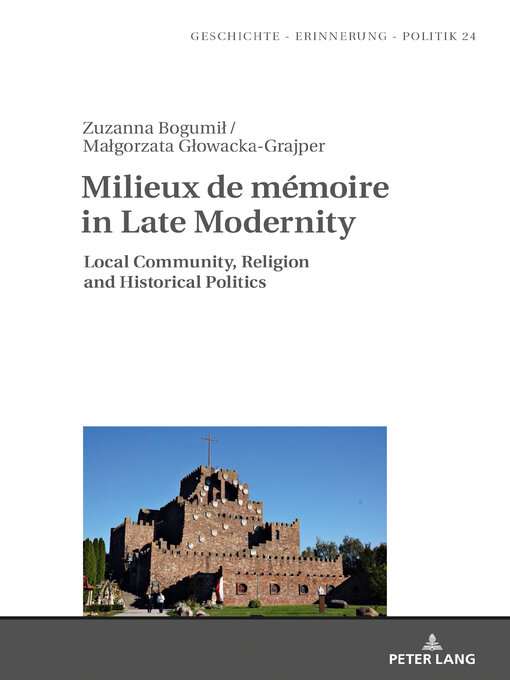
This book shows how vernacular communities commemorate their traumatic experiences of the Second World War. Despite having access to many diverse memory frameworks typical of late modernity, these communities primarily function within religious memory frameworks. The book also traces how they reacted when their local histories were incorporated into the remembrance practices of the state. The authors draw on case studies of four vernacular communities, notably Kałków-Godów, Michniów, Jedwabne and Markowa, to argue that it is still possible in the Polish countryside to discover milieux de mémoire. At the same time, they show that the state not only uses local histories to bolster its moral capital in the international arena, but also in matters of domestic policy.
- Newly Added eBooks
- Most Popular eBooks
- Try Something Different
- Endgame Education
- Indie Authors
- See all ebooks collections
- Newly Added Audiobooks
- Most Popular Audiobooks
- Try Something Different
- Audiobooks for the Whole Family
- Great Narrators
- See all audiobooks collections
- Favorite Magazine Picks
- Health & Fitness Magazines
- Sports
- Food & Cooking
- Business & Finance
- Crafting
- News
- Magazines are Here
- See all magazines collections