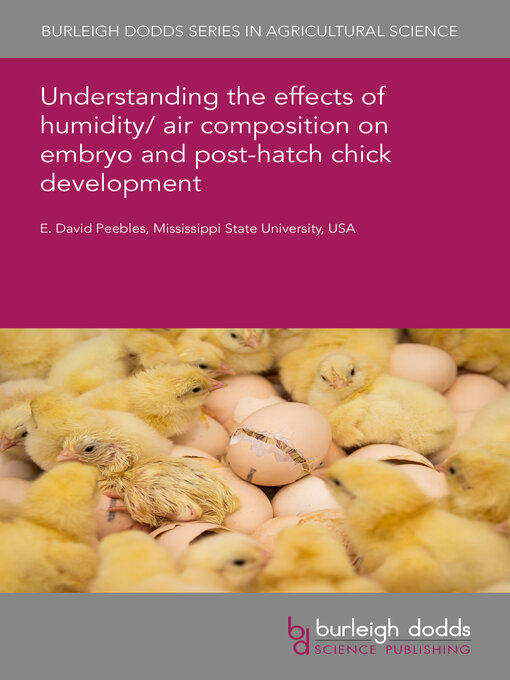
Incubational conditions influence embryo growth and viability, which subsequently affect egg hatchability. Along with temperature, environmental factors in the incubator that are of primary importance for optimum hatchability and chick quality include humidity and vital gas (carbon dioxide (CO2) and oxygen (O2)) levels. Because the movements of gases across the eggshell occur by diffusion, avian embryos are dependent on the composition of the surrounding air, with their development and hatching success being dependent on the ambient partial pressures of O2, CO2, and water vapor. The influences of the incubational environment can extend beyond embryonic development into the post-hatch period with ensuing effects on chick survival, quality, and performance. Various studies have been conducted to establish humidity and vital gas levels during incubation that will optimize the embryonic and post-hatch livability and development of poultry. The prospects for the pragmatic commercial use of these incubational regimens, as well as the physiological bases for their observed effects, are explored in this chapter.
- Newly Added eBooks
- Most Popular eBooks
- Try Something Different
- Endgame Education
- Indie Authors
- See all ebooks collections
- Newly Added Audiobooks
- Most Popular Audiobooks
- Try Something Different
- Audiobooks for the Whole Family
- Great Narrators
- See all audiobooks collections
- Favorite Magazine Picks
- Health & Fitness Magazines
- Sports
- Food & Cooking
- Business & Finance
- Crafting
- News
- Magazines are Here
- See all magazines collections