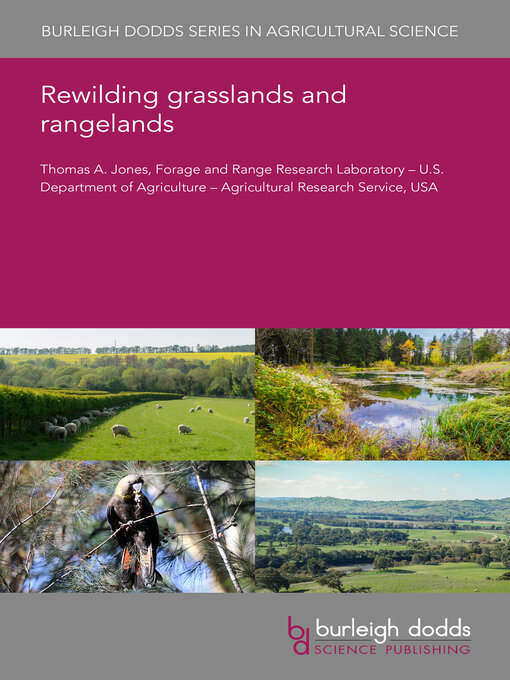
Grasslands and rangelands are disturbance-driven ecosystems that cover 40% of the Earth's land area. They have often been subjected to agricultural improvement or environmental degradation, compromising biodiversity, thus restoration may require nutrient reductions and native seedings. If a seed source is intact and degradation is recent, rewilding (passive restoration) may restore biodiversity. Otherwise, active restoration may be required via the application of 'green hay' or direct seeding. Invasive species may be controlled by scalping, herbicides, mowing, biological soil crusts, or prescribed burning, but eradication may be impractical. Though forbs are more difficult to establish than grasses, they are potentially greater contributors to species richness. Stronger native seed industries are needed to provide biodiversity for restoration. Long-term monitoring of vegetation or seed banks is required to gauge restoration success. A broadscale case study from Utah, USA is provided to illustrate many of these principles.
- Newly Added eBooks
- Most Popular eBooks
- Try Something Different
- Endgame Education
- Indie Authors
- See all ebooks collections
- Newly Added Audiobooks
- Most Popular Audiobooks
- Try Something Different
- Audiobooks for the Whole Family
- Great Narrators
- See all audiobooks collections
- Favorite Magazine Picks
- Health & Fitness Magazines
- Sports
- Food & Cooking
- Business & Finance
- Crafting
- News
- Magazines are Here
- See all magazines collections